A Listening Walk for Following One Sound
A listening walk for following one sound helps you hear how distance and surroundings reshape an ordinary noise, without needing music or special kit.
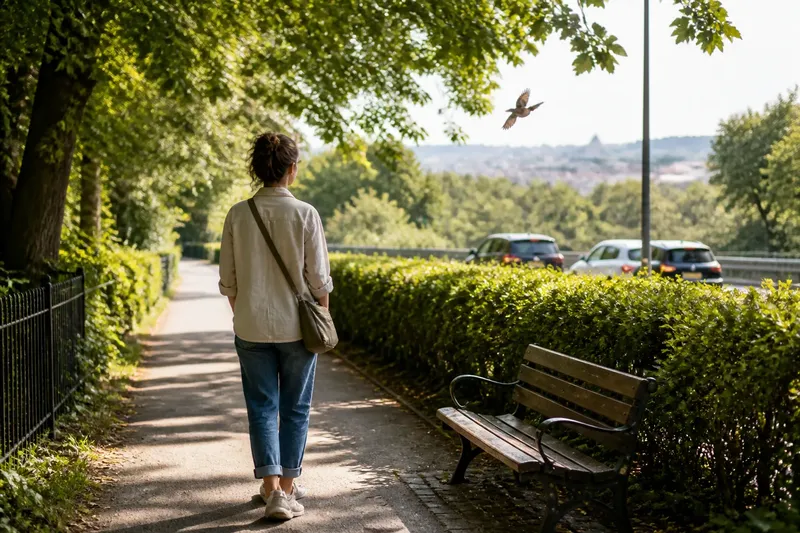
The common mistake on a listening walk is trying to notice everything at once. That turns a passing bus, a bird call and footsteps into a blur; choose one non-musical sound instead, and you can hear how it shifts as you move and pay attention.
This listening walk for following one sound needs no headphones, recording gear or special destination. It is a short exercise in selective attention: pick a sound that is already there, keep it in mind, and observe how distance, barriers and your own focus affect what you hear. Your aim is not to identify every source correctly. It is to notice the changing experience.
Choose a sound that suits your surroundings
Start somewhere you can pause without obstructing anyone: a quiet pavement, a park path, a courtyard or a bench near an open window. Keep your route familiar and easy to leave. This is listening, not a test of endurance, and you do not need to approach a sound source to follow it.
Choose a sound that is distinct enough to recognise but not so compelling that it pulls you into unsafe or intrusive behaviour. A clock or fan may suit a sheltered spot; outside, consider wind in leaves, water in a drain, distant traffic or a bird calling from cover. Avoid following a person’s conversation, a private activity or any sound that would make you cross a road, enter restricted ground or disturb wildlife.
Now decide which situation fits you:
- If the area is busy: choose a sound with a recurring pattern, such as a pedestrian signal heard from a safe place or a particular engine note among the traffic. The recurrence gives your attention a way back when other noises briefly mask it.
- If the area is quiet: choose a subtle but persistent sound, such as leaves moving or water trickling. A quieter setting makes small changes easier to notice, though you may need to stand still before the sound becomes distinct.
- If you are walking with other people: agree to pause together, or choose a sound that does not require you to separate from the group. Shared silence can be useful, but conversation will naturally compete with the sound you are tracking.
- If you are indoors or have limited mobility: stay beside an open window or in a calm outdoor seating area and follow a sound from there. The exercise depends on shifting attention, not covering ground.
- If no sound holds your attention: wait in one safe place and let the soundscape settle. Pick a source only after you can distinguish it from the general wash of noise.
Once you have chosen, give the sound a simple name: “three-note bird call”, “steady hiss” or “metallic rattle”. A plain description is enough. Avoid deciding too quickly what made it; a distant noise can be difficult to identify, and the exercise works just as well when its source remains uncertain.
Follow the sound without chasing its source
For the first part of the walk, stay still. Listen for the sound’s shape: Does it repeat evenly, arrive in bursts, rise and fall, or trail into a faint tail? Notice whether it stays in one place in your hearing or seems to move. You are building a small listening reference, like learning the feel of a key before trying to describe the whole lock.
Then walk at an unhurried pace along a route you already know. Keep the sound in mind, but let your eyes do their ordinary job. If it fades, pause rather than hurrying after it. If it disappears, notice that disappearance; you can resume when it returns or choose another sound without treating the change as failure.
Distance can alter more than loudness. A nearby fountain might have separate splashes and trickles, while the same fountain from farther away blends into a soft, even wash. Moving behind a hedge, wall or row of parked cars may muffle some parts of a sound more than others. Notice these shifts without assuming that every change means the source itself has changed.
Imagine you begin beside a park path with a low traffic hum in the distance. You walk to a bench behind a hedge and pause; the hum becomes less distinct, while a nearby bird call stands out. The expected observation is not that the traffic has stopped, but that a barrier and a new listening position have changed which sound claims your attention.
Use a different approach when the sound keeps changing
Some sounds are steady enough to follow across a short route. Others appear only in brief episodes, or are constantly covered by louder noise. Match your approach to the sound rather than forcing every walk into the same pattern.
- For an intermittent sound: remain in a safe spot and listen for its return. A bird call, gate closing in the distance or gust through branches may leave long gaps; those gaps help you notice what fills the space around it.
- For a sound masked by traffic or crowds: stop moving and listen for a recurring feature, such as a pulse, pitch or rough texture, rather than trying to hear it continuously. If it remains hard to separate, select a clearer sound; straining adds little.
- For a sound that appears to move: keep your position and listen to how its apparent direction and loudness change. A passing vehicle or aircraft can offer a clear arc, while turning your head or walking after it can make those changes harder to compare.
- For a source that stays nearby: move only along a safe, ordinary route and notice what happens as the angle changes. Do not cross barriers, enter private property or go closer merely to settle what the sound is.
Choose one approach and give it your attention for a while. Switching sources every few seconds may be entertaining, but it makes it difficult to tell whether a change came from the sound, your position or a new distraction.
What should you notice as the walk unfolds?
How do I choose one sound when everything overlaps?
Choose a sound you can recognise again, not necessarily the loudest one. A repeated rhythm, a clear pitch or a distinctive texture can help it stand apart from the background without requiring you to name its source.
Should I keep walking when the sound disappears?
Pause and give your ears a moment before deciding. The sound may be masked or may have ended; either way, noticing the gap is useful, and you need not follow it into an unsafe place.
What if I cannot tell where the sound comes from?
Keep describing what you hear rather than guessing. “Thin, high and repeated” tells you more about your listening than an uncertain label, and the source can remain a mystery.
Can I use a phone to record the walk?
You can, but recording changes the exercise: you begin making choices about the microphone and playback as well as listening. For a first pass, leave the phone in your pocket; if you later record, do so from a place where stopping is safe and unobtrusive.
Separate the sound from your attention
Near the end, pause and ask two different questions: What changed in the sound itself, and what changed in your attention? Perhaps the source grew fainter behind a wall. Perhaps it stayed much the same, but a nearby conversation briefly drew your focus away. These are different observations, even when they happen together.
Your body also affects what reaches you. Turning your head can make a source seem more prominent on one side; walking on gravel may mask delicate sounds beneath your feet. Instead of trying to eliminate every distraction, notice when it enters and whether the chosen sound returns to your awareness.
When the walk is over, make a brief note if you like: the sound’s texture, where you paused, and one change you heard. Skip the note if it pulls you out of listening. There is no need for a map, a score or a conclusion about what the sound means.
Adapt the walk to the place and the day
A sheltered urban route offers hard surfaces, traffic and abrupt barriers; a garden or woodland path may offer softer, more intermittent sounds. Neither setting is inherently better. Choose the place where you can listen comfortably and move without taking attention away from ordinary safety.
Weather and activity alter what is audible. Wind can mask a distant source; rain can make surfaces busier; a quiet interval may reveal a sound that was present all along. If the setting becomes uncomfortable or your attention is needed elsewhere, stop the exercise and carry on with your day.
Let the chosen sound guide your listening, not your feet. That distinction keeps a listening walk safe and also makes it more revealing: you learn how a source changes across distance and surroundings without needing to pursue it. Next time, choose a different kind of sound and compare the texture of attention, not the walks themselves.