Before the Album: Music Released One Side at a Time
Music released one side at a time shaped focused listening. Learn how single-sided records differed across formats and what their playable face asked of a song.
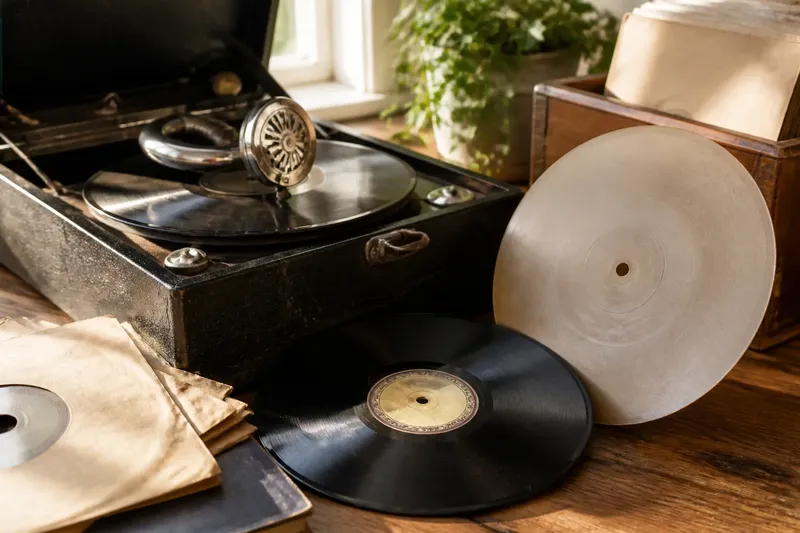
The common mistake is to treat every single-sided record as the same object with half its music missing. Music released one side at a time appeared on different materials and playback systems, so the blank reverse alone cannot tell you how a disc was made or meant to be heard. What it does reveal is a listening choice: one playable face, followed by a decision to replay, select another record or stop.
Single-sided records changed with their materials and methods
“Single-sided record” describes a layout, not one uniform technology. Early commercial discs made from shellac-based compounds, later vinyl records and other disc formats differed in construction and playback requirements; recording also shifted from acoustic methods, in which sound was gathered mechanically, to electrical recording using microphones and amplification.
These changes did not happen as one neat replacement. Formats overlapped, and a disc’s material, size, speed and recording method could vary with its period and intended player. A blank reverse is therefore a useful clue about the release, but not enough to identify its exact age or technical history.
Think of the recorded face like a postcard: a limited surface frames a message, but does not determine whether it is a song, an instrumental performance or spoken material. The format gives the music a physical boundary; the people making and choosing records decide what fills it.
A groove made each performance a physical event
On a disc, a groove guides the stylus as it traces the recorded sound. In acoustic recording, performers worked near a recording horn that gathered sound mechanically; electrical recording later used microphones and amplification to capture and reproduce sound differently. Neither method turns every single-sided record into a single historical type.
Playback also made the performance tangible. A listener set a compatible disc in motion and heard the stylus travel across its recorded face, from the start of the groove to its end. The side had a physical beginning and finish rather than a progress bar or an automatic queue.
When the music stopped, the listener could lift the stylus, replay the side, choose another disc or leave the room quiet. A blank reverse made that break especially clear: turning the disc over would not continue the programme if no recording occupied that face.
One recorded face gave a release a clear centre
A single-sided release centred attention on the material recorded on its playable face. That might be a song, a dance tune or a spoken performance; the layout does not identify the genre, and it does not by itself tell us how the artist composed or performed the piece.
There was no second recorded selection on the reverse to create the later familiar A-side-and-B-side relationship. The one playable face was the programme. A listener might choose it for the performer, the piece or the occasion, then decide what to hear after it ended.
Imagine a listener who has bought a single-sided disc featuring a familiar singer’s new comic song. They place it on a player suited to that disc, listen through the performance, then find a smooth, unrecorded reverse when they turn it over. The result is a pause and a fresh choice: replay the song, select another record or end the session.
A blank reverse made the pause part of listening
The unrecorded side affects how the object is handled and how its programme is understood. There is one recorded face to play, and no musical reason to turn the disc over during that side’s performance.
This can make each selection feel like a separate visit: one performance ends, and another requires a new choice. It does not mean every listener paid uninterrupted attention. It describes the invitation built into the object: hear this face, then decide what comes next.
A collection could be assembled from separate records rather than supplied as a sequence on one disc. The listener’s shelf and playback choices helped shape a session. A single-sided record is therefore useful evidence that recorded music has not always been organised around the album as the default unit.
One-sided and two-sided discs organise a session differently
A two-sided disc can place another recording on its reverse, so turning it over continues the programme after a pause. With a single-sided record, continuation instead comes from replaying the face, choosing a different disc or stopping.
That distinction is not a simple march from primitive to advanced. One-sided releases foreground a recorded face; two-sided discs can pair selections or extend a session; later multi-track formats can make a longer sequence part of the object’s appeal. The formats offer different ways to arrange listening, not a universal measure of musical quality.
Nor does “one side” always mean “one song” in every context. The content and the disc format varied, so the useful question is what is actually recorded on the playable face and what action the object invites when playback ends.
What can a single-sided record tell you?
How can I tell which side is recorded?
Look for grooves, a label and any markings, using good light and avoiding contact with the playing surface. If you cannot identify the disc or its playback requirements, check the label or ask a knowledgeable record specialist before playing it.
Did every single-sided disc contain a song?
No. A recorded face could hold instrumental music, spoken performance or other material. “Single-sided” describes the layout of the recording, not its genre or subject.
Why might a maker leave the reverse blank?
The reason could relate to the recording method, production choices or the release’s intended use. Do not infer one explanation from a blank side alone; period, construction and markings may help provide context.
How did listeners choose what to hear next?
They could replay the recorded face, select another disc or stop listening. Since the reverse had no programme, the next selection required a choice beyond that surface.
Read the disc as a recording and a listening instruction
To understand music released one side at a time, notice both the recorded face and the blank reverse. Together they show how a physical format could frame a performance and create a pause without dictating what musicians made.
If you come across an original disc, handle it by its edges and follow guidance suited to its material and playback needs; fragile formats and unsuitable equipment can cause damage. The blank reverse is a clue, not a complete history: labels, construction and recording characteristics help put the object in context, while the ending of the recorded side reveals the choice left to its listener.