The Myth of the Naturally Perfect Take
The naturally perfect take is a recording myth. Learn to separate expressive choices from technical flaws and keep the performances that make a song feel alive.
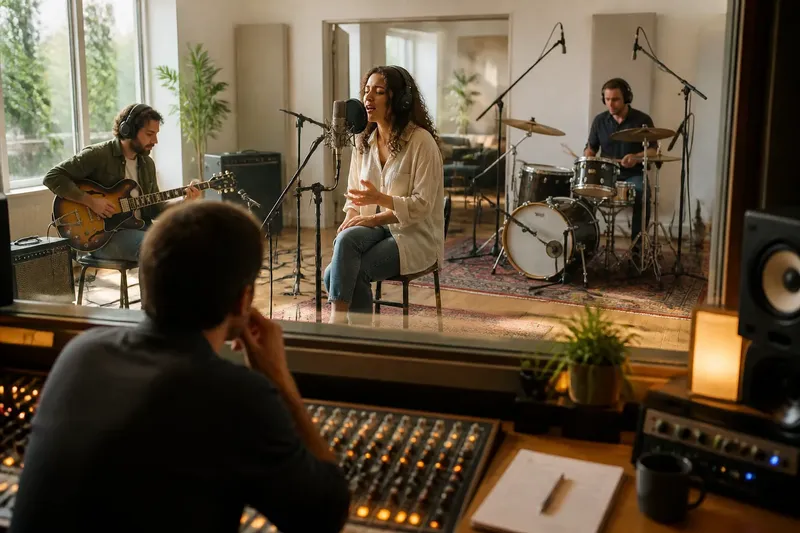
The common mistake is to treat the naturally perfect take as the goal: one flawless pass, captured whole, with no edits and no audible strain. That idea can cost a singer or player the very thing a recording needs—an expressive performance—while turning small, harmless imperfections into reasons to start again.
A compelling take is not the same as a technically immaculate one. The useful question is not whether every note, breath and beat is pristine, but whether the performance communicates the song and whether its flaws distract from that message. Those are separate judgements, and keeping them separate makes recording decisions clearer.
A strong take is a performance, not a scorecard
Recording makes details easy to inspect. A singer can hear a consonant land slightly early; a guitarist can spot a string squeak between chords; a drummer can notice one stroke that sits behind the beat. Close listening helps, but it can also make a tiny detail seem more important than the phrase around it.
Think of a take as a spoken sentence rather than a row of isolated notes. A slight rasp at the end of a line may sound like effort or tenderness. A note that blooms late may give a phrase room to breathe. Correcting either by habit could make the performance tidier yet less convincing.
Technical perfection still has a place. A clipped word, an unwanted bump, a fret buzz that masks the melody, or timing that makes the band feel unsettled can pull attention away from the song. The point is not to excuse every error; it is to ask what the listener will hear and whether the detail matters in context.
Separate expressive choices from distracting faults
Listen first for intention. Does the singer lean into a word, hold back from a note, or let a phrase fall away? Does the guitar attack make the rhythm feel urgent, or does a rough edge simply obscure the chord? A performance can be uneven by design, and a perfectly even one can feel emotionally blank.
Then listen for the recording itself. A click from a chair, a clipped breath, or a sudden level change may be a technical problem rather than a performance choice. Room sound and microphone placement matter too: a reflection that blurs consonants can make a good vocal harder to understand, while a little room tone may help it feel present.
Use playback at two scales. Hear the complete song or section at a normal listening level, then inspect a specific moment if something draws attention. A flaw that only becomes bothersome under repeated, close scrutiny may not deserve an edit; a word that remains unclear in the full mix probably does.
Choose another pass for a reason
Repeating a take is useful when you can name what should change. Perhaps the chorus needs more lift, the verse needs a gentler attack, or a lyric is consistently hard to understand. A specific intention gives the next pass direction. “Make it perfect” gives the performer little to work with and can encourage stiff, cautious playing.
Before another pass, decide what must remain. If the first take has a persuasive build into the chorus, note that quality and ask the performer to preserve it while adjusting the unclear lyric. This keeps a new attempt from becoming a vague search for improvement, where each pass loses a little character and gains only marginal neatness.
Say you are recording a singer whose first chorus rises with a rough, breathy edge, but one word is swallowed by the guitar. You could keep the vocal’s lift and ask for another pass focused on clearer diction, then compare the phrase in the full arrangement. The expected result is not a flawless chorus; it is a clearer lyric that retains the original sense of momentum.
Editing can preserve a performance or flatten it
Comping—selecting sections from several recorded passes—can help when one take has the right verse and another has a stronger chorus. It is a practical recording choice, not proof that the performer failed to deliver a complete pass. A comp works best when the chosen pieces still sound as if they belong to one continuous performance.
Listen at every edit point for more than pitch and timing. Check breath, tone, room sound and the way a word begins or ends. A splice between two differently shaped breaths can sound oddly abrupt even when the notes line up. A small crossfade may smooth a transition, but it cannot make mismatched phrasing feel natural.
Editing can also over-correct expressive timing. Tightening every syllable to a grid may remove the slight push and pull that makes a vocal or instrument feel conversational. Keep an edit when it solves a clearly audible problem; leave it alone when its main benefit is satisfying the editor’s close-up view of the waveform.
How do you know when a take is good enough?
Should every note be in tune?
Pitch matters when it distracts from the melody or clashes with the arrangement. A brief bend, scoop or rough edge may belong to the style, so judge it in the phrase rather than treating the tuner as the final arbiter.
Is a one-pass recording more authentic?
A continuous pass can capture a distinctive arc, but authenticity is not determined by the number of edits. The recording should feel coherent and alive; that may come from one pass or carefully chosen sections from several.
When should you stop recording?
Stop when further passes are no longer changing a named musical quality, or when new attempts keep losing qualities the earlier take already had. Save the strongest version before continuing, so you can compare decisions rather than relying on memory.
Can a small mistake improve a take?
Yes, if it adds character without confusing the listener. A rough attack or uneven breath can make a line feel human; a noise that hides the lyric or breaks the groove is a different matter.
Let context decide what stays
A sound that feels exposed in a solo track may disappear once bass, drums and backing instruments enter. Conversely, a delicate vocal detail can become prominent in a sparse arrangement. Make the final judgement in the mix the listener will hear, not only in the isolated track.
One plain analogy helps: a recording is like a well-used wooden table, not a glass display case. A mark can tell you something about how it was made, while a splinter in the wrong place catches your hand. The useful distinction is not pristine versus damaged; it is character versus distraction.
The naturally perfect take is a tempting story because it turns a complicated artistic decision into a simple target. In practice, a strong recording balances clarity with individuality. When you revisit the naturally perfect take idea, listen for the song’s intention first, fix only what interrupts it, and let the details that carry feeling remain audible.